5 Signs You're Not Eating Enough Fiber (And What To Do About It)
Most fiber gaps show up as bloating, constant hunger, blood sugar crashes, constipation, and rising cholesterol. Roughly 95% of Americans fall short of the recommended daily fiber intake of 25 grams for women and 38 grams for men. That gap doesn't just affect digestion. It shows up in your energy, your cravings, and even your lab results.
The fix isn't complicated. It starts with recognizing the signs, then closing the gap with foods and blends that make fiber easy to get daily.
Why Fiber Intake Matters for Adults 30 to 50

Fiber slows digestion, feeds gut bacteria, and helps regulate blood sugar. As we move through our 30s and 40s, digestion naturally becomes less efficient. Hormonal shifts, slower metabolism, and daily stress all make gut support more important, not less.
Fiber is the nutrient most people underestimate. It doesn't get absorbed like protein or fat. Instead, it travels through your gut, feeding beneficial bacteria and keeping digestion moving.
5 Signs You're Not Eating Enough Fiber
The most common signs of low fiber intake are irregular bowel movements, constant hunger, blood sugar crashes, bloating, and creeping cholesterol numbers. Here's what each one looks like in daily life.
1. Constipation or Irregular Bowel Movements
Fewer than three bowel movements a week is a classic sign of low fiber. Fiber adds bulk to stool and helps it move efficiently through the intestines. Without enough of it, waste sits longer and becomes harder to pass.
2. Feeling Hungry Soon After Eating
Fiber slows stomach emptying, which helps you feel full longer. If you're hungry again an hour after a meal, low fiber may be the reason. Meals built around refined carbs and protein alone often lack the bulk that fiber provides.
3. Blood Sugar Crashes and Afternoon Energy Dips
Soluble fiber slows the absorption of sugar into your bloodstream. Without it, blood sugar spikes quickly after eating and then drops just as fast. That drop is often what triggers the mid-afternoon energy slump and sudden craving for something sweet.
4. Bloating and Stomach Discomfort
This one sounds contradictory, since people often blame bloating on too much fiber. In reality, chronic low fiber intake slows digestion overall, allowing gas and food to sit longer in the gut. A gradual, consistent increase in fiber—paired with water—usually resolves this over time.
5. Rising Cholesterol Numbers
Soluble fiber binds to cholesterol particles in the digestive tract and helps remove them from the body. When fiber intake drops, this natural cholesterol-clearing process weakens. Small, sustained increases in fiber are one of the most researched dietary strategies for supporting healthy cholesterol levels.
|
Sign |
What's Happening in the Body |
|
Irregular bowel movements |
Stool lacks bulk and moves too slowly through the intestines |
|
Frequent hunger |
Meals lack the bulk fiber provides to trigger fullness |
|
Blood sugar crashes |
Sugar absorbs too quickly without soluble fiber to slow it |
|
Bloating |
Digestion slows overall, allowing gas to build up |
|
Rising cholesterol |
Less fiber means less natural cholesterol clearance |
New to Moringa? Here's What You Need to Know
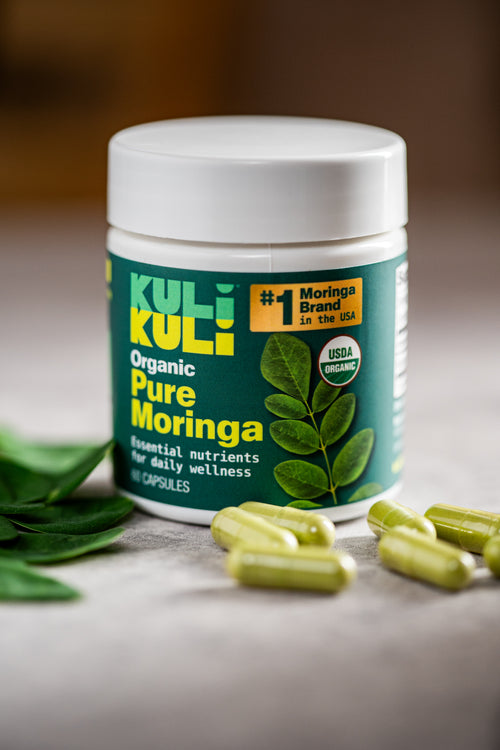
Moringa is a nutrient-dense green leaf packed with iron, calcium, antioxidants, and plant protein. Often called the "Miracle Tree," moringa has been used for generations in parts of Africa and Asia as an everyday nutritional staple, not a trendy add-on.
Dried moringa leaf contains meaningfully more iron by weight than spinach, along with a solid dose of plant-based protein. It has a mild, earthy taste that blends easily into drinks without overpowering other flavors.
Moringa isn't a fiber powerhouse on its own. At Kuli Kuli, it's paired with ingredients like Jerusalem artichoke and spirulina to combine everyday nutrition with real, functional fiber support.
Kuli Kuli sources its moringa from small family farms, many of them women-led, using regenerative growing methods. Choosing moringa-based products supports both your gut and the farming communities that grow it.
What To Do About Low Fiber Intake
Increase fiber gradually, drink more water, and choose whole foods over processed ones. Jumping from 10 grams to 30 grams of fiber overnight often causes gas and discomfort. A slower, steady increase over two to three weeks gives your gut bacteria time to adjust.
Practical steps that help:
-
Add a fiber-rich blend to your morning smoothie or drink
-
Swap one refined-grain meal a day for a whole-grain option
-
Keep fruit with the skin on when possible
-
Drink water alongside every fiber increase
-
Space fiber intake across meals instead of loading it into one
Crave Reset Superfood Drink Mix: An Easy Daily Fiber Boost

Crave Reset Superfood Drink Mix delivers 6 grams of fiber and only 1 gram of sugar per serving. It's built specifically to help close the fiber gap without adding a chore to your routine.
The blend combines four ingredients, each doing a specific job:
|
Ingredient |
Active Compound |
What It Does |
|
Jerusalem Artichoke |
Inulin (a prebiotic fiber) |
Feeds beneficial gut bacteria like Bifidobacteria |
|
Moringa |
Iron, plant protein, antioxidants |
Adds concentrated everyday nutrition |
|
Green Spirulina |
Phycocyanin |
Supports antioxidant activity and cellular health |
|
Pineapple |
Bromelain (a digestive enzyme) |
Helps break down protein for easier digestion |
Jerusalem artichoke is the standout ingredient here. It contains inulin, a prebiotic fiber that feeds beneficial gut bacteria and has been shown in clinical research to increase Bifidobacteria populations within just a few weeks. That's the same fiber responsible for Crave Reset's 6 grams per serving.
Bromelain, the enzyme naturally found in pineapple, helps break down protein and may ease the bloated feeling that comes after heavier meals. Combined with moringa and spirulina's antioxidant support, the blend covers fullness, digestion, and everyday nutrition in one scoop.
Crave Reset mixes into water for a refreshing, tropical pineapple drink. It's also easy to blend into a smoothie if you want something heavier.
Frequently Asked Questions
How much fiber should I eat per day?
Adult women need about 25 grams of fiber daily, and adult men need about 38 grams. Most people fall well below this, which is why gradual daily increases matter.
Can too much fiber cause bloating?
Yes, if fiber intake increases too quickly. The safest approach is a slow, steady increase paired with plenty of water over several weeks.
Is Crave Reset good for daily fiber intake?
Crave Reset provides 6 grams of fiber per serving, which is roughly a quarter of the daily target for women. Used alongside fiber-rich whole foods, it can meaningfully help close the gap.
Does fiber help with weight management?
Fiber supports fullness by slowing digestion, which can reduce overeating and snacking between meals. It's not a standalone weight-loss solution, but it supports habits that make healthy eating easier to sustain.
The Bottom Line
Low fiber intake shows up as bloating, hunger, energy crashes, constipation, and rising cholesterol. These signs are common, but they're also manageable with consistent, gradual changes to your diet.
Whole foods should always be the foundation. For an easy daily boost, Crave Reset Superfood Drink Mix combines prebiotic fiber from Jerusalem artichoke with moringa, spirulina, and pineapple for a satisfying, gut-friendly ritual. And if moringa is new to you, this is an easy, low-effort way to start.
This article is for informational purposes and is not a substitute for medical advice. Talk with your healthcare provider about your individual fiber needs, especially if you have a digestive condition.