Sea Moss vs. Moringa: Which Superfood Is Right for You?
Sea moss is a mineral-dense seaweed best known for skin hydration and immune support, while moringa is a nutrient-dense leaf best known for iron, energy, and stress resilience. Both are called superfoods, but they come from different parts of the plant kingdom and solve different problems. Picking the right one depends on the specific benefit you're chasing.
This guide breaks down what each superfood actually is, how their nutrients differ, and which one fits your goals. We'll also show you two easy ways to cook with moringa, plus how Kuli Kuli's Sea Moss & Blue Spirulina Superfood Gummies make sea minerals as easy as a daily gummy.
What Is Sea Moss?
Sea moss is a mineral-rich red seaweed, scientifically known as Chondrus crispus, also called Irish moss. It grows along rocky Atlantic coastlines and has been eaten for centuries, most famously during the 19th-century Irish Potato Famine.
Raw sea moss has a mild, salty, oceanic taste. Once dried and processed, it becomes nearly flavorless, which is why it blends easily into gummies, drinks, and food.
Sea moss is prized for its broad mineral profile, including iodine, potassium, calcium, and magnesium. It also contains natural prebiotic fiber that supports gut bacteria and skin hydration.
What Is Moringa?
Moringa is a nutrient-dense green leaf that comes from the Moringa oleifera tree, often called the "Miracle Tree." Unlike sea moss, moringa grows on land and has been a staple food across parts of Africa and Asia for generations.
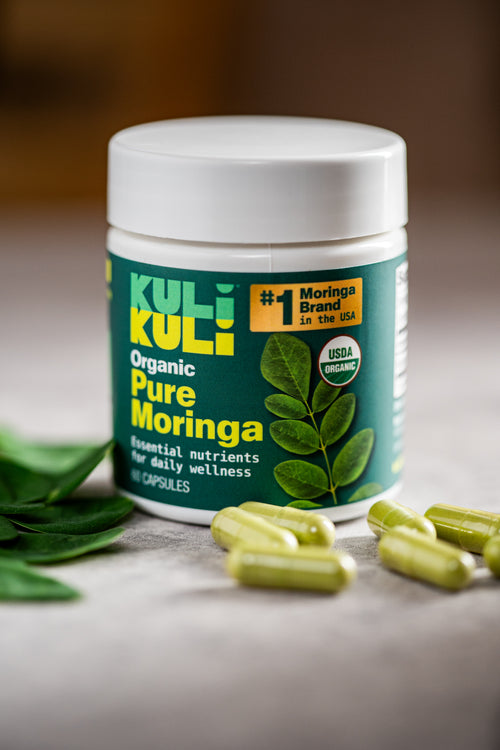
Dried moringa leaf contains meaningfully more iron by weight than spinach, along with a solid dose of plant-based protein and antioxidants. It has a mild, earthy flavor that disappears easily into smoothies, dips, or oatmeal.
Moringa is often described as "coffee's calmer cousin." It delivers steady energy without any caffeine or stimulant crash.
Sea Moss vs. Moringa: Key Nutrient Differences

Sea moss leads in iodine and marine minerals, while moringa leads in iron, protein, and plant antioxidants. Here's how the two compare side by side.
|
Nutrient Focus |
Sea Moss (Chondrus crispus) |
Moringa (Moringa oleifera) |
|---|---|---|
|
Standout mineral |
Iodine, for thyroid and skin support |
Iron, for energy and red blood cells |
|
Protein |
Minimal |
Meaningful plant-based protein |
|
Key compounds |
Prebiotic fiber, marine trace minerals |
Antioxidants and 150+ bioactive plant compounds |
|
Best known for |
Skin hydration, immunity, collagen support |
Energy, iron levels, stress resilience, focus |
|
Growing source |
Ocean (coastal seaweed) |
Land (tree leaf) |
|
Caffeine content |
None |
None |
Which Superfood Fits Your Health Goal
Choose sea moss for skin, immunity, and mineral support, and choose moringa for energy, iron, and stress resilience. Neither is a replacement for the other. Many people use both for different reasons.
If your priority is skin hydration or immune support, sea moss is the more direct fit. Its minerals and antioxidants support collagen production and the gut-skin connection.
If your priority is steady energy, focus, or stress resilience, moringa is the better starting point. Its iron and plant compounds support red blood cell function and a calmer, more resilient nervous system.
How Kuli Kuli Sources Its Sea Moss and Moringa
Kuli Kuli wild-harvests its sea moss from the Atlantic coastline and sources its moringa from small family farms. Sea moss is hand-gathered along the shoreline, then naturally sun-dried without harsh chemicals. It goes through a rigorous "dual-hurdle" safety process that meets strict FDA standards.
Moringa leaves come from small farmers, with a focus on African and women-led social enterprises. Choosing either superfood supports sustainable harvesting practices instead of industrial processing.
Sea Moss & Blue Spirulina Superfood Gummies: An Easy Daily Ritual
Sea Moss & Blue Spirulina Superfood Gummies deliver Irish Sea Moss, Blue Spirulina, and Baobab in a pineapple colada flavor. No fishy aftertaste, no sticky texture. Just a tropical, crave-worthy gummy that fits into your morning routine.
The blend combines three ingredients, each doing a specific job:
|
Ingredient |
Active Compound |
What It Does |
|
Irish Sea Moss |
Marine minerals (iodine, potassium, calcium) |
Supports skin hydration and mineral nutrition |
|
Blue Spirulina |
Antioxidant algae compounds |
Supports a healthy immune system |
|
Baobab |
Vitamin C, prebiotic fiber |
Supports collagen production and the gut-skin connection |
Each pouch has 60 gummies. The gummies are 100% plant-based, vegan, and gelatin-free, with no added ocean aftertaste to work around.
Easy Recipes Using Moringa
Moringa blends easily into savory dishes, not just smoothies. Here are two ways to bring it into your kitchen.
Moringa Spinach Guacamole
Dice 2 roma tomatoes, 1 red onion, and half a head of garlic into a large bowl. Mix with 2 cups of chopped, drained spinach. Add 5 diced avocados and mash coarsely, then stir in 2 tablespoons of Pure Moringa Powder (2 single-serving packets) until evenly mixed. Finish with 3 tablespoons of lemon juice, salt, and pepper to taste, then chill before serving.
Moringa Chips
Slice a pack of fresh corn tortillas into chip-sized pieces. Heat 2 cups of oil to 350°F and fry the tortilla slices until golden brown, then drain on paper towel. While still warm, toss the chips with 1 tablespoon of Pure Moringa Powder (1 single-serving packet), salt, and pepper until evenly coated. Store in an airtight container to keep them crisp.
Serve the two together for a nutrient-dense, moringa-forward snack spread.
Frequently Asked Questions
Is moringa supplement good for my specific benefit, like sleep, focus, energy, gut health, stress, or immunity?
Moringa is formulated to support several of these at once. It's associated with steady energy without jitters, improved digestion and less bloating, deeper sleep and recovery, calmer stress resilience, and clearer focus and mood.
Does moringa contain caffeine or other stimulants, and how much?
No. Moringa is naturally caffeine-free and contains no stimulants. Its energy support comes from iron and nutrient density, not stimulation.
Is moringa vegan, gluten-free, dairy-free, or otherwise compatible with my diet?
Yes. Kuli Kuli's Pure Moringa Powder is certified organic, non-GMO, vegan, and naturally gluten-free.
How much of the key active ingredient do I get per serving?
A serving is 2 rounded teaspoons (6 grams) of moringa leaf powder. That serving provides about 50% of your daily recommended iron intake.
The Bottom Line
Sea moss and moringa both qualify as superfoods, but they serve different goals. Sea moss, like the kind in Kuli Kuli's Sea Moss & Blue Spirulina Superfood Gummies, is the better fit for skin hydration and immune support. Moringa is the better fit for steady energy, iron levels, and stress resilience.
You don't have to choose only one. Many people rotate both into their week, reaching for a sea moss gummy for a mineral boost and stirring moringa into guacamole, chips, or a smoothie for an everyday nutrient lift.
This article is for informational purposes and is not a substitute for medical advice. Talk with your healthcare provider before adding new supplements, especially if you have a thyroid condition or are pregnant or nursing.